The meaning of Quartertonality

I’ve had this blog for a few years now, but only really been seriously writing for it for just under a year. The real beginning was in July 2010 when I began writing for groovemine.com. Mark, the owner of that site, began sending me more music than I had ever heard before. I decided then that I really had an opportunity to fine tune my skills as a listener and as a critic and writer.

I’m trained as a musician. I can read music (obviously) and know a lot about music theory. I read books on music theory for fun because that is what I am interested in. In becoming a “classically trained musician” one studies a lot of “classical” music (though I abhor the term, but that is neither here nor there.) Instead of calling it “classical” music let’s just call it concert music, or serious music if you prefer. The term “classical” is weighed down with so many connotations of time period and it brings to mind dudes in powdered wigs and the idea that that sort of thing is “out of date” or only of interest to people of the upper echelon of society. Anyway, concert music is fine.

In the interest of simplicity let’s just call everything else that isn’t serious music “pop” music. Yes, all of it. Pop music. That doesn’t mean only Top 40 music, it doesn’t mean stuff that is just played on the radio, I mean music that isn’t played in the concert hall, by a string quartet, or by a symphony. Let’s just keep it simple. So there is concert music and there is pop music. We can argue ad infinitum about how to divide up pop music some other day. Let’s just pretend that Lady Gaga and Megadeth are lumped into the same group for now, ok? Ok.

Anyway, when analyzing concert music it’s common to spend a lot of time carefully considering the cultural significance of the work. It’s also appropriate to analyze the functional harmonies, the use of chromaticism, the instrumentation, the orchestration, the tonal scheme etc. etc. There are several ways to go about this: there is Schenkerian analysis, Roman Numeral analysis, one can derive a matrix, find the different uses of tone rows, find uses of hexachordal combinatoriality, tetrachords, modes and on and on.

The thing with concert music is that there is a lot of time wrapped up in it all. The composer is seen as this guy, or gal, that sits hunched over a dimly lit desk, one hand on their head, the other desperately clutching at a pencil as they place each note down onto paper with a purpose. Every single note is wrought with meaning, every second they spend conceiving their “work” and producing it and rehearsing it has a framework of genius at work. When the work is finally completed it is foisted onto the public (which generally doesn’t want it, but that’s another topic entirely) and only after it has survived out there “in the trenches” for 10 years or more, only then does anyone take notice and finally decide, “Hey, this might be something that we might want to look at!” Eventually a musicologist spends several hundred hours hunched over a dimly lit desk, clutching his or her head in one hand and a pencil in the other marking the score, making connections and shouting “Eureka!” to an empty house. Perhaps he wakes the dog. Soon his truly genius writing is published in a journal that is only read by other musicologists, theorists and grad students that are writing papers for the musicologists and theorists.

The general public, goes about their business outside the music hall, unaware that any of this is happening, not that it would change anything if they knew that it did. They listen to people like Sarah Palin that says wonderfully encouraging things like, “arts funding is frivolous”. The general public loves this woman. She’s so much like them.

It truly is great to feel loved outside of ones art. God bless America!

John Adams is one of America’s most successful composers. He has found a niche of sorts writing works about current events. His first opera (yes, people do actually still write operas!) “Nixon in China” premiered in 1987, about Tricky Dick’s visit to China 15 years prior. He also wrote another opera about the hijacking of the Achille Lauro entitled “The Death of Klinghoffer” in 1991, 7 years after the trajedy. His most recent opera (hey, the guy likes to write operas, and he puts a lot of people in the seats!) “Dr. Atomic” is about the Manhattan Project. The opera premiered in 2005.

These are all great works, and I’m only taking an example from one composer for brevity’s sake. The subject matter that Adams is tackling is a tangled web of complex philosophical questions. His works are almost universally loved and accepted upon their premiere. Most composers are not so lucky, but then again most composers aren’t nearly half as good either. The problem that I see is that these works do take such an extremely long time to produce. Because of this lengthy turnaround it appears that the only things really worth writing about are these really monumental moments in extreme human struggle.

Yes these works are worthwhile, and yes they are worth more analysis and promotion. I believe that everyone should take some time to familiarize themselves with as many great works as they can. It is part of our culture, it’s far more than “entertainment”. That being said, so is pop music.

Before I delve into that I’m going to quickly tell a story about my favorite concert composer, Charles Ives.

He was born in Danbury, Connecticut. A true Yankee New Englander. His father was a musician, in charge of a military band during the Civil War and leader of several community bands in Danbury. Charles, in his compositions, would include the sounds of his childhood whether it was the sound of two marching bands coming down the street in opposite directions, the sound of Central Park at night or the sound of the local hook and ladder company. He was not interested in what many other composers were doing at the time and didn’t actually make his living with his music, nor did he want to. He was an extremely successful insurance salesman who just so happened to be one of the most important American composers of the 20th century. Nobody knew this until after he died when conductors like Leonard Bernstein and Leopold Stokowski championed his music. Though during his life he did manage to win the Pulitzer Prize in composition for his 3rd Symphony. He declined the award stating simply, “awards are the badges of mediocrity.” Yes, someone that badass wrote serious music. Serious, experimental music.

One of his experiments involved the use of quarter-tones, an idea he got from his father. His father, equally as crazy, was trying to capture the pitches played by the local church bells. He would run outside to hear, and rush back inside to the piano to try and capture the pitches. Back and forth as many times as he could while the bells were still ringing. He was unable to capture the sound of the bells and concluded that the pitches they were sounding were notes that were located “between the keys of the piano”. He heard something that was so far outside of what was normal that he was not even able to reproduce it by normal means. He needed to wander far beyond what was accepted as normal in order to bring to fruition his music. Charles, throughout his works, continued this trend. He worked in near solitude, almost completely unknown by the serious music world and was truly innovative.

His music is truly amazing and I would urge you to check out his works.

To me Ives’ use of quarter-tones is the most identifiable and most unorthodox thing that he ever did. It was certainly the most notable thing he did as far as sound. If you hear his 3 quarter tone pieces for 2 pianos you will immediately notice a difference in sound. Nobody else was doing this at the time. Now there are several composers that work with exotic scales or scales of their own design in order to brand themselves with a unique sound.

What Ives was doing was writing music that was true to him and because of that there was a sense of immediacy. His music is also much studied to this day and much performed as well. Recordings are still being made and his name is firmly in place as one of the great American composers.

The point of this story is that at the time Ives was writing his music the divide of what was serious music and what was pop music was just beginning to be created. It was the time of Tin Pan Alley where songs were being cranked out by writers that were masters of formula, much like today’s mainstream music. A lot of that music has completely disappeared, but that time also gave us the music of George Gershwin, who doesn’t neatly fit into either category. Somewhere around this time it appears that the decision was made that serious music is worth being held up on a pedestal and being preserved through repeated performance and analysis and pop music is not worthy of the time it takes to listen to it.

With my blog I am directly challenging that idea. Pop music deserves better analysis, and serious consideration. The analysis of pop music needs to match the immediacy of the music. One can’t spend 20 years thinking about the implications of a certain album or a certain style of music because by then it is most likely irrelevant. The music deserves to be considered in its own time and it deserves to be considered by people that know what to consider, which is to say that typical blog-style analysis is not good enough for pop music.

I have read too many reviews that describe how an album makes the reviewer “feel”. That analysis is irrelevant to everyone except the reviewer. I want to know exactly why the guitar line is doing what it is doing. Where are things going harmonically and how does that compare to other music that we are currently hearing right now? I want to know where each band is getting their ideas from. I want to know why bands from Toronto sound different than bands from Bushwick. There are answers to all of these questions and the only way that they are going to be found is through repeated listening. Not just listening to one album over and over again, but listening to every album you can get your hands on, because each album is a piece of the puzzle and will help answer all of the questions that you have and bring to light some new ones.

The current state of pop musicology is ill equipped to handle this task. Most of them are still busy pondering the significance of Nirvana while the rest of us have moved far beyond that. Things take far too long in the university world, and by the time any studying is done the significance is completely lost.

Quartertonality is a word that is made up, but the meaning is real. Quartertonality is looking for new ways to do things. It is taking a serious analytical approach to current, worthwhile popular music. It’s the belief that just because something isn’t popular that doesn’t mean that it isn’t worth looking into. It’s finding the motivations behind everything, the reason behind things, digging further than anyone else, listening more than anyone else and providing thoughtful, honest analysis that is based less on opinion and more on fact. One has to move quick because the amount of music that comes out every week is staggering. There isn’t enough time to sit on an album for 20 years and then write about its significance because that changes every single day.

Sorry there’s no pictures in this post.

Figurines

This post originally appeared on tympanogram.com on April 7, 2011 here.

Figurines is a poppy rock trio based out of Denmark that has been touring fairly relentlessly since their formation. Their latest self-titled release is 11 tracks of tight songwriting, catchy hooks and memorable melodies.

Though their most recent album was released in September 2010, the band has yet to make it to the United States in its support. That is all going to change in June when they play a few dates along the East coast in Boston, Philadelphia, and Brooklyn. That they are touring here in the Summer seems apt as their songs encompass an aura of sunniness with an upbeat attitude.

Each of the songs on “Figurines” remind me a little bit of the catchiness of The Spinto Band, but the opening track, “Hanging From Above” is especially great. The strings soar while the guitar echoes the exuberant vocals in the chorus. It’s sweet, bright, catchy and infectious. That’s a pretty good formula for a good summer hit. Maybe listening to this song in the months leading up to summer can help us all ignore the grey skies and rain for a bit.

Head to Figurines’ Bandcamp to grab “Hanging From Above” on vinyl or digitally.

New album: tUnE-yArDs – "w h o k i l l"

This post originally appeared on tympanogram.com on April 20, 2011, here.

Merrill Garbus of tUnE-yArDs

There has been much talk online about w h o k i l l, the 2nd full length album from Merrill Garbus’ near-solo project tUnE-yArDs. Every review places it in a favorable light which positions it firmly as a stand out hit of the 2nd quarter of 2011. It just seems to have the aura of “Best of 2011″ surrounding it. I’m no different in that respect. There really isn’t anything out there right now that sounds quite like this album.

Recognizable and quirky right on down to the proper capitalization of the project’s name and the sound which the album contains. Garbus has created songs that are complex yet compact, pulling inspiration equally from Graceland-era Paul Simon and The Talking Heads as much as they do Prince. It’s a very rhythmically vibrant album with passionate vocal lines that crackle with energy.

Lead-off single “Bizness” seems to encapsulate all of the ideas of the album and compresses them to one 4 and a half minute gem. The melodic lines right off the bat seem to leap right out of the speakers before Merrill’s voice begins to fiercely intone the verse. It’s not long before saxophones are adding a new layer to the already contagiously catchy, energetic tune.

The album w h o k i l l is out now and if you don’t already own it, you should. It’s available digitally through iTunes and physically through 4AD.

Album review: Sloan – "The Double Cross"

Halifax natives Sloan are celebrating their 20th year as a band with an album full of hook laden power pop perfection. As usual the album title serves as a double meaning. Double cross meaning 2 xs, the Roman numeral for twenty, or perhaps it’s a reference to something more disquieting? It’s the former, not the latter.

It seems that every time one reads about Sloan it’s the same thing: something along the lines of “4 songwriters with distinctive voices and styles”. That is usually followed by a reference to The Beatles, such as the “Canadian Fab 4” or some such nonsense.

It really is a shame that Sloan is not more popular in the U.S. I feel that their albums are strong, for the most part, and nobody anywhere can write a song as good as these guys. I’m not saying that being popular in the United States would mean that they have finally “made it”. I’m just saying that they deserve a worldwide audience and if the U.S. didn’t have such terrible taste in pop music, and people knew what was good for them, they’d be playing Sloan on radios across the country. If more people had a chance to hear them I don’t doubt for a second that they would have a much larger following.

But alas, they are (at least in the United States) something of a cult band, with the inherent small but loyal following. Sloan manages to produce consistently great material even within less popular albums, such as Pretty Together and Action Pact the one-two punch of mediocrity that their fans love to hate. It seems that those two albums went against their sound that usually remained pretty well in tact from album to album with nothing too jarring happening on sequential releases.

Recently they seem to be back on track in a big way with 3 really solidly fantastic albums. “Never Hear the End of It”, an amazing double album from 2006, “Parallel Play” from 2008, the “Hit and Run EP” of 2009 and now “The Double Cross” continues that trend.

Their output, even going back as far as the landmark album “Twice Removed” from 1994, never seemed to follow current trends. Sloan seems content and determined to consistently chart their own path.

Being that they’ve been around for so long, and because of the 4 distinct songwriting styles, Sloan fans have mostly aligned themselves with one band member or another. Much can be written about the distinct stylistic virtues of each member as a songwriter, though I don’t intend to do go down that road. That’s the easy way out. It seems that nobody is too willing to talk about Sloan in terms of the band, Sloan. Fans will often cry out about apparent inconsistencies within albums stemming from the different approaches and sometimes that seems the way to go. Album efforts don’t always feel like band efforts. Sometimes the style shifts from song to song can be a bit much. Perhaps these complaints can be mostly boiled down to fans missing the “good old days” of Sloan.

In my opinion these “good old days” are typically fans projecting unfair expectations onto the band in order to cease forward momentum of their career in order to preserve their own personal memories of that time in their life when they first discovered the band. Music fans, it seems, want bands to stay the same, but not too much the same, because they’ll typically complain either way. Sloan has continued to grow, and for better or worse, have always done their own thing.

Sloan has been around long enough to have “eras”. The most recent such era I would say starts with “Never Hear the End of It”. I feel that this album marks the beginning of a prolifically great songwriting rebirth that followed two albums in which they seemed to be making a concerted effort to change their sound. Since this rebirth it seems as though they have been trying to strike a balance between working separately and working as a band. “Never Hear the End of It” used the technique of melding songs nearly seamlessly together by painstakingly organizing the tracks by key which helped immensely with the flow of the album. They did this before, on their 1999 album “Between the Bridges” though with “Never Hear the End of It” people had a bit more of a difficult time holding interest through to the end, as it was a rather lengthy double album.

Sloan - "The Double Cross"

That album was put together over an extended period of time, and they documented the process with a series of videos on Youtube that I eagerly anticipated watching each week.

“Parallel Play” was the same return to form but it seems a lot more fragmented. The separation from song to song was far more noticeable, though each of those songs were catchy, well written and impeccably produced. Fans again spoke up about a band that seemed unwilling to work together. Even the name of the album seemed to be admission from the band that they were not really working together, but instead took a “separate but equal” approach, convening later to decide democratically what material would make it to the album.

Following “Parallel Play” was the “Hit & Run” EP. It’s a solid offering that experimented with a digital only release and was the perfect addendum to “Parallel Play”.

As I mentioned before, fans try to lump each songwriter’s works together as if each album is a compilation of 4 separate bands, but this discounts how well the albums actually work as albums. Just as “Never Hear the End of It” goes for long stretches patching the songs together and linking them in ingenious ways, so does “The Double Cross”. In addition Sloan utilizes more inter-band participation. Other band members sharing verses, singing background, etc. Such as Chris singing on the bridge of Andrew’s “She’s Slowing Down Again” which introduces a new texture to the rambling rock and roll sound of the track. Chris also appears on the Jay penned “Beverley Terrace”.

The album has a general warmth to it, with very present bass frequencies. It sounds lush and full even on MP3. It sounds like it was mastered for vinyl; it’s not thin sounding at all, or overproduced and compressed to all hell. Standout track “Green Gardens, Cold Montreal” features a delicately plucked acoustic steel string guitar with a perfectly placed ascending Rhodes line. It’s that sort of AM radio quality song that seems to be their niche lately, and they make it work really well.This is also the case for “Your Daddy Will Do”, which has the added bonus of featuring some doubled vocals by Patrick on the verses.

“It’s Plain to See” brings some upbeat, rockabilly flavor (flavour if you’re Canadian), to the album. The ultra-close, multi-tracked vocals are super clean and precise but I think that if the entire group were singing them that the variety of vocal timbre would have helped to thicken things up a bit. The track “Unkind” features some Thin Lizzy guitar work and slapback retro-echo on the vocals that is quite effective.

The Double Cross serves as a great celebration of 20 years of music by a band that deserves more attention. They really should be playing in large venues around the world as there are so few groups that are able to do what they do as well as they do it. If you’ve never heard Sloan, or haven’t figured out where to begin listening, this album would serve as a good introduction to the group.

Pre-order it here: http://store.yeproc.com/album.php?id=15511

You can listen to every song they have ever committed to disc at their site: http://www.sloanmusic.com/music

And be sure to check out their youtube channel where they have included little interviews about each song on the album: http://www.youtube.com/user/sloanmusic

(I haven’t included any tracks from this album as I’m fairly certain that the band would not be happy with that. I have, however, already pre-ordered the vinyl and would like to highly encourage you to do the same here. You can also preview every track from the album at that link as well, so what are you waiting for? Go!)

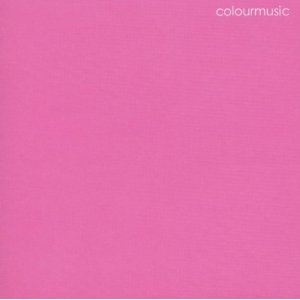
Album review: Colourmusic – "My ______ is Pink"

Go ahead: admit the first thing that popped into your head when you read the title. Yeah, that’s what I thought, sicko. Well that’s not how this reviewer read it at all. I read it as “My blank is Pink” because I am classy and sophisticated and a terrific liar.

Perhaps the provocative title, or non-provocative title as the case may be, serves as the point of entry for the album. Upon reading the title the listener is probably lead to expect something confrontational, something that challenges and pushes the envelope a bit. This album certainly does all of those things to a certain degree. An apt comparison in sound and approach can be drawn from Sleigh Bells to Colourmusic, though stating it that simply is selling Colourmusic quite short.

Sleigh Bells stormed onto the scene with a recognizable “meters in the red” and completely overblown, overdriven sound that, to me, tries a little too hard to get noticed and can be filed away as “gimmicky”. Colourmusic tones it down a bit while still maintaining a powerful and edgy sound that is more organic, yet still charged up. It comes off sounding a lot more realistic and believable. The band doesn’t have an overbearing synthetic sound. Live drums pound behind shredding, layered buzzsaw guitars.

Those guitars are more likely to churn out riffs that sound like they were ripped straight out of the Black Sabbath playbook, while the vocals tend to sound a bit more ethereal and akin to Animal Collective. Take for example the vocals in the chorus of “We Shall Wish (Use Your Adult Voice)”. There are moments there that conjure the same sound-world from which Animal Collective operates with lush multi-layering and plenty of breathy reverb. Colourmusic’s songs go beyond exploring one particular sound. The songs have instrumental appeal in addition to those explorations, meaning that they sound like a band playing instruments, rather than creating music that relies heavily upon the manipulation of other sounds. Instead, Colourmusic seems to be interested in having the listener focus on the layers of sound that one instrument or even one note can produce.

Colourmusic - My___-is-Pink
Colourmusic - "My___ is Pink"

The opening of “You For Leaving” states simply the staccato attack of one chord on a piano that is sustained, allowing the listener to hear all of the overtones intermingling and growing into a mass of sound right before the song opens up to a full chorus and pipe organ. It’s an approach that is akin to the work of spectral analysts that compose music where every idea for a composition is literally derived from information that is found in one small fragment of a sound. Colourmusic is adept at extrapolating ideas from sounds but their scientific attention to detail doesn’t diminish their ability to write a dancey, fun song like “Dolphins & Unicorns”.

That song, like “The Little Death (In Five Parts)”, moves between opposing textures starting with a danceable rhythm and moving to more ambient territory. The beginning of “The Little Death (In Five Parts)” though is more like a false start that anticipates a pummeling, raunchy guitar line that is thick and densely distorted, covering plenty of rhythmic ground before the vocals actually begin in a cloud of arrhythmic echoes. The track continues to spend 6 minutes tearing through material that moves from driving guitar work, into a slow dirge  of fuzzed out metal before decaying into spacious minimalist territory.

Serving as a counter to all the abrasive guitars are the passionate vocals that appear on tracks like “Feels Good to Wear” and “We Shall Wish” where a sense of longing and pain can be gleaned. The usual ambient effects of the voice in the latter track are placed on the instruments temporarily which is a welcome flipping of the texture. The instrumental breaks cast that song into an arena rock light where the track just opens up , pushing and pulling against the wall of sound that is barely contained by the band.

The band is agile enough to handle jumping between styles and textures even within the same song. They can move from loud and powerful to quiet, spacious and delicate and make it make sense. The construction of their songs is tight enough and logicalto the point where these changes don’t seem jarring.

Rounding out the end of the album is the track “Whitby Harbour”, which is simply the sound of waves lapping up on the shore. Perhaps this serves as a point of respite from a fairly intense album, or perhaps this is moving more in the direction of finding the music within sounds. A bit of spectral analysis of nature.

This album, “My ____ is Pink”, is nearly unclassifiable. It sounds loud and psychedelic in spots, but direct and danceable in most others. Somewhere between  electronic and rock with songs that have intricately crafted dynamic shapes and tight, well thought out structures.

It’s due out May 10th in the U.S. and you can order it here: http://colourmusic.spinshop.com/

[audio:http://quartertonality.com/wp-content/uploads/2011/04/14_Track_14.mp3|titles=Colourmusic – “Yes!”] [audio:http://quartertonality.com/wp-content/uploads/2011/04/12_Track_12.mp3|titles=Colourmusic – “Mono”] [audio:http://quartertonality.com/wp-content/uploads/2011/04/05_Track_05.mp3|titles=Colourmusic – “You For Leaving”]

Jerseyband Kickstarter project

This post was originally published at here at Tympanogram.com on April 15, 2011:

Jerseyband

Jerseyband is a unique group. They play a style of music that they have dubbed “lungcore” – a hard-edged version of prog-metal fronted by a horn section. The amalgam of jazz elements with metal make complete sense in their hands, and they have happily produced six full length albums of fun, tricky and hard hitting music over the course of their decade of existence. I have personally been a fan of their music since 2006 when a friend let me borrow their 2003 album Little Bag of Feet for Shoes. What struck me right away was the perfection in their playing, the sudden turns, the death metal stabs of low end guitar and the way that the sax section really worked as one. Sure, they are blending several different styles of music, but they really make it something wholly original. I never thought I would bang my head to saxophone music, but I had never heard music like this before.

Their live album Lungpunch Fantasy showcased compositions that had never been committed to disc before, with the added bonus of putting their live chops on display. The amazing thing is that it serves to prove that their tightness is not a result of any studio trickery. These guys are the real deal. Discovering that they have all graduated from the prestigious Eastman School of Music brings things even more into focus.

Jerseyband has recently completed the recording sessions for what they hope to be their seventh full length album. This is where we come in. They need help funding the mastering, mixing and production and are trying to do so through Kickstarter. If you aren’t familiar with how the site works, basically someone proposes a project and it is only funded fully if enough people pledge money within the time limit. Though a lot of the projects may seem frivolous, there are quite a few that are worthwhile. I see it as a way to independently do anything. Visit the site, take a look at the goodies that can be had for pledging at a certain level, and consider helping this band bring some new music into the world. You can check out all of their music on their Bandcamp page and watch them in action on Youtube.

[audio:http://quartertonality.com/wp-content/uploads/2011/04/05-F.E.T.-Dogtron.m4a|titles=F.E.T.-Dogtron]


Record Store Day, 2011

Record Store Day this year is April 16th, this coming Saturday. In case you aren’t aware, it is the annual celebration of independent music stores. If I remember correctly it started out as a pretty small endeavor with only a few fanatical people paying any attention to it at all. It has grown to something significant with record stores all over the country in big cities and small all taking part. The day serves as a reminder to people that music is still made on vinyl and CD and it encourages everyone to go out, support local shop owners and musicians.

Over the years an increasing number of musicians and bands have started producing special releases for Record Store Day to help give even more of an incentive for people to get out there and support music. To honor this day, and give it a little bit more promotion, I’d like to recount some of my fondest memories of my favorite record stores in several different cities.

Rochester, New York:

The Bop Shop: www.bopshop.com
274 Goodman St. N #B123
Rochester, NY 14607

The focus at this store is on jazz, prog and garage. Every single album is in brilliant condition. Tons of used 45s and even an extensive amount of victrola records.

Very knowledgeable, friendly and helpful staff that can be found typically listening to Sun Ra or Syd Barrett solo albums on the stereo that broadcasts throughout the store. They also bring in musicians to play in front of the store. One recent concert featured the ICP (instant composer’s pool)orchestra.

You can check their obsessively cataloged and rated vinyl on sale at their webstore.

Memorable purchase: My copy of The Mothers of Invention’s “Freak Out”, original pressing in pretty good condition. He was asking a certain price and cut it in half for me, and also ran it through his Nitty Gritty and it plays beautifully. I was also there once when he realized a copy of “Pet Sounds” had a minor ding in it, so he handed it to me for free.

The Record Archive: www.recordarchive.com
33 1/3 Rockwood St.
Rochester, NY 14610

Although the original store, the one that I frequented, is no longer operating, they have a new location. When I was visiting the store both locations were open, but the original was closer to the school I was going to, so I would often skip class to go buy records.

That original location focused heavily upon CDs. New and used, and accepted trade-ins, as I’m sure they probably still do. What I remember most, and what I was there most often for was going through the aisles of used records that were shelved to the ceiling of the almost secretive basement back room.

Differing from The Bop Shop in that the record collection here seemed to focus more on quantity than quality, they did have everything. Showtunes, classical, metal, prog, rarities, punk etc. Very little in the way of new vinyl, comparatively but I was into prog. rock at the time so it was perfect for me.

It smelled like a basement, but felt comfy and cozy. I would spend hours there just searching around, never really looking for anything specific but always walking out with at least one purchase.

Memorable Purchase: King Crimson’s “Starless and Bible Black”. I set it onto the turntable that they would allow you to use to preview purchases and decided that I wanted it within about 4 rotations.

Buffalo, New York:

Spiral Scratch: spiralscratchrecords.blogspot.com
291 Bryant St.
Buffalo, NY 14222

Easily the best record store in Buffalo. I’m going to go with the Phoenix rising from the ashes cliché on this one. The original location was devastated by a fire and the owner, with the help of a huge outpouring from the community, managed to re-open the store in an even better location than before. It’s small and friendly with a lot of new vinyl and some used showcasing a love for old school hard-core punk. Concert tickets are also available at the location and talking to the owner is always a great time.

Toronto, Ontario, Canada

Rotate This: www.rotate.com
801 Queen St. West
Toronto, ON, Canada M6J 1G1

I used to spend a lot of time in Toronto, being that it is only a 2 hour drive from where I currently reside. I think I only visited the former location once, but their current store is like a beautifully organized cavern of records. From what I remember you can purchase concert tickets here as well. Lots of used vinyl, but they have plenty of new 12″ and 45s as well as CDs. No trip to Toronto is complete with a stop at Rotate.

Memorable Purchase: The only Silver Jews album that I own, “Lookout Mountain, Lookout Sea”, was bought here. People say that it is the worst of their albums, but I didn’t know any better and I came to love it.

Criminal Records: www.crimedoesntpay.ca
493 Queen St. West
Toronto, ON, Canada M5V 2B4

I always thought of Criminal Records in Toronto as the “hip” record store. Bright and white on the inside with turntables, shirts, belts and belt buckles for sale in addition to their vinyl. This store is more of a boutique setting with, like the Record Archive in Rochester, a focus on quality over quantity. Also, someone told me that Wayne Petti of Cuff the Duke, one of my favorite bands, works there. I always hoped to find him behind the counter when I stopped in, but alas….

Chicago, Illinois:

Reckless Records: www.reckless.com
1532 North Milwaukee Ave.
Chicago, Il 60622

Ok, so their website is an abomination, but trust me the store is pretty much the opposite. This was the first record store in Chicago that I ever visited. In July 2006 I was extremely overwhelmed by everything that was in the store, so much that I couldn’t figure out what to buy. At that point I was still scared to a certain extent to listen to unfamiliar music. Meanwhile my brother and his wife were running all over, talking to the clerks about some, what I thought to be, obscure music that I had never heard of.

One of the things I like about the store is the description on every record. They have pithy reviews on everything they sell, which makes it easier for people like the 2006 me to branch out and try new things.

Memorable Purchase: Kraftwerk’s “Radio Activity”. It’s a reissue that I have, but I still remember it for being one of my first purchases there. I also have a t-shirt designed by Dan Ryan that I bought there.

Permanent Records: www.permanentrecordschicago.com
1914 West Chicago Ave.
Chicago, Il 60622

These dudes are insane. Lance, Liz and Dave run an amazing little shop that showcases their love for garage rock. They have in-stores (BYOB!), their own label and a podcast that amazes me every single month with the amount that these guys know about seemingly intensely obscure acts. They also write incredibly detailed emails every month describing exactly what they have in stock. I would feel completely comfortable just picking up anything at random that they suggest and giving it a spin. If you aren’t in Chicago and you want an education in new music, listen to their podcast, I can’t urge you strongly enough.

The important thing now is that you go out and support your local record shop. Buy a record or CD this saturday. There are tons of special releases coming out just for this event. You can check the official Record Store Day site here.

And if you don’t live near a record store (like me) then you should check out some record label’s online stores. My personal favorites are Polyvinyl, Kill Rock Stars, Touch and Go and Sub Pop.

Happy Record Store Day!

Album review: Dag För Dag – "Boo"

I used to own a cassette when I was a kid. Well, I owned several. Having grown up in the 80’s means I went through a lot of cassettes. Blank tapes became canvases that I recorded memories onto. They contained the songs I listened to as I passed the days riding my bike around in the rain. Store bought tapes that were found to be sub-par, having only that one song that was worth listening to, were easily converted to mixtapes with a simple strip of strategically placed scotch tape. I always liked tapes more than CDs for this reason, the ability to make them my own. There was more of a connection with them than there was with CDs. The few cassettes that were store bought held a special place for me, they seemed so much more personal and memorable than the CDs that I own now that are cast into the corner without so much as a glance every few days as I bump into them as I walk past. They are furniture.

There was one tape in particular; I don’t remember where I got it, and I can’t for the life of me remember what band it was that made it. The only thing that I do remember about that cassette is that I played it in my walkman incessantly. The sleeve was purple, and it created this mood somewhere between mischievous, mysterious and dangerous. I imagined that the tape was recorded while the lead singer (whom I also imagined was the guitarist playing a Fender Jaguar guitar) recorded it while he was on the run from the cops. He was hiding out in darkened basements writing and recording songs to help pass the time while making him still feel connected to society in some way. He wanted to remain connected to the society he knew he was inevitably going to be taken from.

This album, “Boo”, by Dag För Dag, reminds me so much of that long lost but not forgotten cassette and comes the closest to replicating the mood, feeling and the sound of something not really sinister, but dangerous and at the same time apprehensive of that danger.
Dag För Dag is a duo of siblings Sarah and Jacob Snavely. Though the duo is originally from the United States they have since settled in Sweden. Their music experiments with darkness and light and seems to occupy echo laden caverns. There is plenty of space in the ensemble. By that I mean that there are no non-stop walls of shoe-gazey noise. Most of the sound occurs as a result of the guitar’s short ideas sustained via reverb in the spaces between the instruments actually playing.

Dag För Dag - "Boo"
Dag För Dag - "Boo"

Most of the album unfolds in a sort of medium tempo slow burn, but the band is able to kick the energy level up quite a bit as evidenced in “Animal”, a track that is both anthemic and powerful. It seems to conjure the energy and spirit of Yeah Yeah Yeah’s in the chorus that is kicked off with an emphatic shout of “Let’s go!”

The tracks that populate the majority of “Boo” are minimal in their action with the focus placed squarely upon the shared vocals. The contrast between the high, breathy and sweet lugubrious tones of sister Sarah and brother Jacob’s curt, rough and slightly off-pitch and half spoken vocal style is a noticeable point of divergence from track to track. Sarah’s voice is more noticeably drenched in reverb and often harmonized with itself in multiple tracks. Her voice is smoky and mysterious, making her songs sound akin to those created by bands like Black Rebel Motorcycle Club or The Raveonettes. A sound that is tribal and haunting.

“I am the Assassin” has a pounding backbeat with drums churning out in perpetual motion while the vocals soar through the atmosphere. At about the halfway point of song there is an abrupt break- just enough for us to wish its return, which it does. In the just over 2 minutes of the song the band creates an enticing atmosphere and place a memorable melody into the listeners ear, but before long it’s over. The band is most effective in their shorter songs such as “I am the Assassin” and “Hands and Knees”, which manages to add some extended guitar work to the mix that is reminiscent of The Joshua Tree era U2 in its echoey “less is more” aesthetic.

However, the band loses a little bit of its allure in extended tracks like “Wouldn’t You” where there isn’t quite enough going on, save for a droning synth in the background and persistent drums. The saving grace of the track are Sarah’s vocals that have a way of shining through all of the darkness of the ensemble. The album at this point runs into a bit of a rough patch, with “Wouldn’t You” in the middle of 3 songs that really don’t have much holding the songs together. “Silence is the Verb” re-works Warpaint’s “Undertow”, but it includes a guitar break that doesn’t really go anywhere and the song seems to lie flat.
Thankfully the back half of the album does pick things up significantly with “Seven Stories” which does well in creating an atmosphere while at the same time shaping the composition into something that builds and grows. There is excitement and maybe a bit of cacophony as everything seems to be charging full steam ahead.

Dag För Dag does well creating moody, atmospheric gems with an air of mystery. The seeming unevenness of the album seems to rely a little too heavily on the slow and dark, but I feel that they are at their best using their ability to generate a mood in shorter, catchier songs. The voice of Sarah Snavely is unique and powerful, balancing out some of the darker material and adds to the mystique of the album.

[audio:http://quartertonality.com/wp-content/uploads/2011/04/02-I-Am-the-Assassin.mp3|titles=I Am the Assassin] [audio:http://quartertonality.com/wp-content/uploads/2011/04/11-Animal.mp3|titles=Animal]

Official site: http://dagfordag.com/

Available for download now on iTunes. Physical release in the U.S. on April 26.

New Grand Lake single

Grand Lake, having recently released their truly wonderful EP “Leaves Ellipse” has now put out the 2nd single from that EP.

“Christmas, California”, described perfectly by Grand Lake bandleader Caleb Nichols as “drenched in springtime sunshine, total California ear-candy.” It’s a fun song and one of the many highlights of “Leaves Ellispe”.

The song will also be available on a vinyl-only compilation released on Record Store Day by Burnside Distro – also featuring HAD Records label-mates the Heavenly States, as well as the incomparable Sea Of Bees.  You should definitely look for that on Record Store Day, which is April 16 this year.

Check out the song here, as well as the video that was filmed around the band’s new home of San Luis Obispo, California. The video is framed as a polaroid picture that captures the sunniness of the song.

http://grandlake.bandcamp.com/track/christmas-california

Grand Lake – Christmas, California from Ryan Terzian on Vimeo.

Let’s review:

-new EP by Grand Lake, “Leaves Ellipse” is available for download here and here

-you should go to one of those sites to purchase the EP after you listen to this new single and watch the video.

-thanks.

Grand Lake - "Leaves Ellipse"